Persistent headaches. Unexplained weakness. Seizures. Numbness. Changes in memory or sensation.
These symptoms often originate in the electrical activity of the brain, nerves, or muscles.
Neurophysiology diagnostics at Ruby Hospital are designed to identify those signals accurately, early, and in a way that directly informs treatment.
This is clinical testing built to support real medical decisions.
Electroencephalogram (EEG)
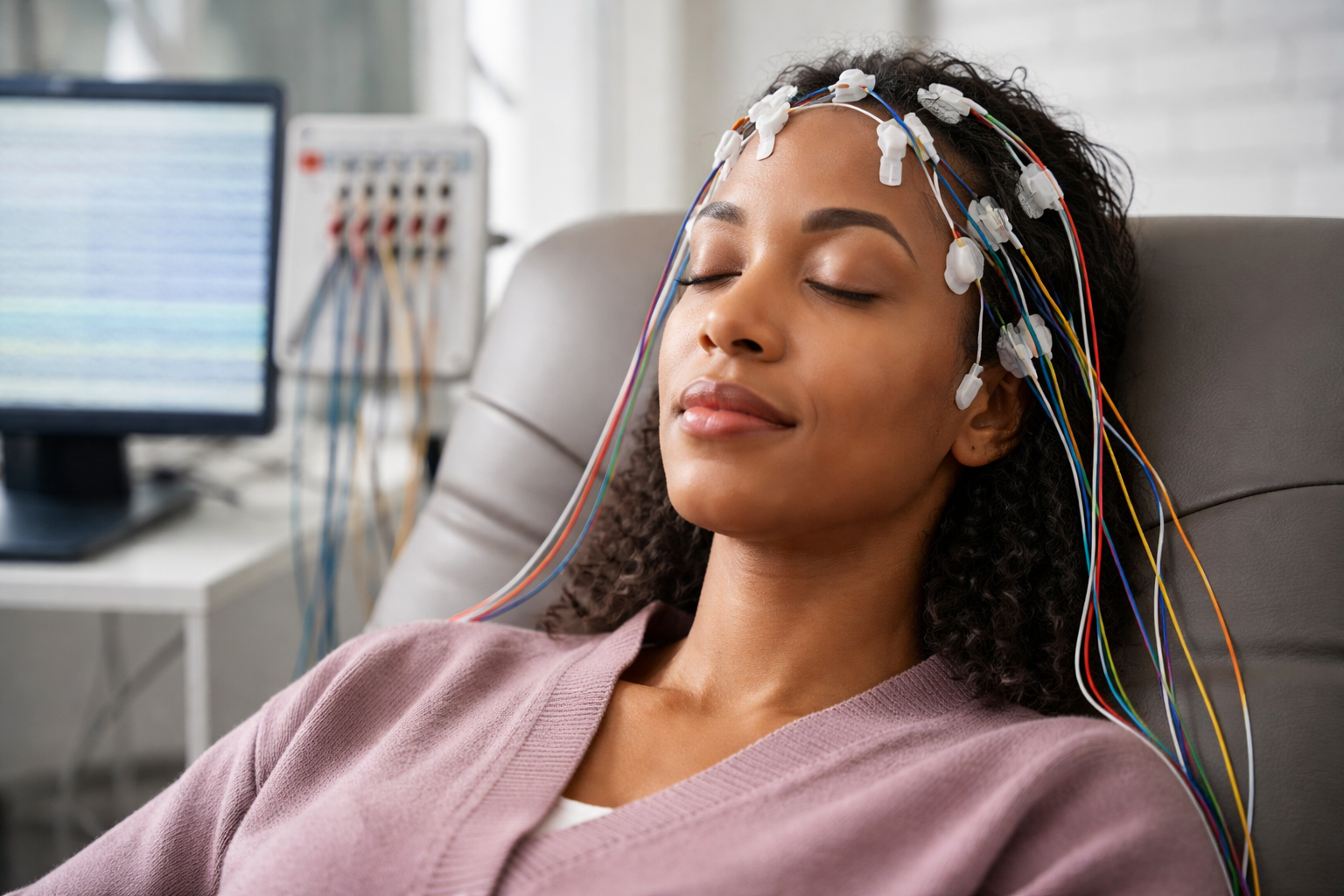
EEG evaluates brain activity to support the diagnosis of seizure disorders, epilepsy, sleep-related conditions, head injuries, dementia, and unexplained loss of consciousness. Results are interpreted in clinical context by experienced specialists.
Electromyography (EMG)
EMG assesses muscle function and the nerves controlling them. It is commonly used to investigate muscle weakness, nerve compression, chronic back or neck pain, and neuromuscular disorders.
Nerve Conduction Studies (NCS / NCV)
NCS measures how effectively nerves transmit electrical signals. This test is essential in diagnosing peripheral neuropathy, carpal tunnel syndrome, sciatica, and nerve injuries.
Accurate diagnosis reduces unnecessary treatment, shortens time to care, and improves outcomes.
Neurophysiology testing provides objective data that helps clinicians determine the most appropriate next step—whether medical, surgical, or rehabilitative.
Experienced interpretation
All studies are conducted and reviewed by trained specialists with experience across neurology, neurosurgery, and musculoskeletal care.
Hospital-grade systems
Our diagnostic equipment meets international clinical standards for accuracy and reliability.
Connected care
Results are seamlessly integrated with Neurology, Neurosurgery, Orthopedics, and Rehabilitation services within the hospital.
Efficient outpatient testing
Most studies are completed within an hour in a calm, controlled clinical environment.
Clear reporting
Reports are structured, timely, and designed to support clinical decision-making.
Procedures are non-invasive or minimally invasive.
Follow-up consultations and treatment planning are available within the same care system.