Seeing What the Brain Is Saying: Why EEG Is Changing Neurological Diagnosis in Uganda
Ruby Hospital Uganda
February 2026
There is a moment many families remember clearly.
It may happen at home, at school, at church, or quietly during an ordinary day. Someone you love suddenly becomes unresponsive. They collapse. They stare blankly. They forget something they should remember. And just as suddenly, it passes.
Life resumes. But the question remains. What caused that moment?
For years, many neurological symptoms in Uganda lived in uncertainty — explained away as fatigue, stress, spiritual concerns, or isolated events. Families waited. Watched. Hoped it would not happen again. But neurological conditions rarely explain themselves without the right tools.Today, Electroencephalography more commonly known as EEG is changing that reality.
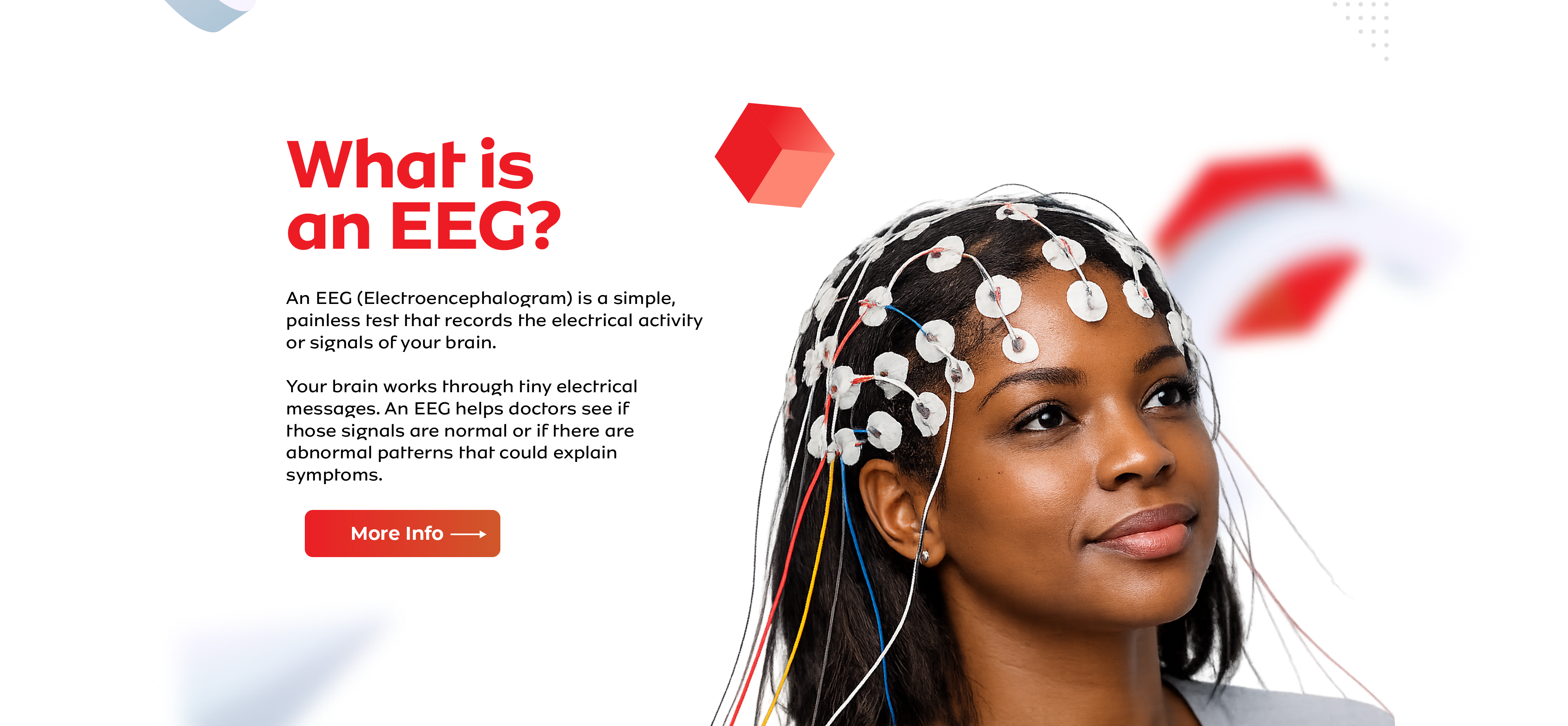
Because the Brain Doesn’t Just Show. It Signals. Modern brain scans such as MRI and CT scans reveal structure. They show how the brain looks. But EEG reveals something different. It shows how the brain works. An EEG is a simple, painless test that records the electrical signals the brain uses to communicate. Every thought, movement, and memory depends on these signals. When they change, the body responds sometimes as seizures, blackouts, confusion, or unexplained symptoms. Instead of guessing, clinicians can now observe these signals directly. Instead of assumptions, they gain clarity.
Why This Matters More Today
Uganda’s neurological landscape is evolving. Epilepsy remains one of the most common neurological conditions. Unexplained blackouts, memory lapses, and seizure-like episodes affect patients of all ages children, young adults, and older populations alike. Many of these conditions are invisible on traditional scans. But they are visible on EEG.
EEG helps diagnose and monitor epilepsy, unexplained loss of awareness, memory disturbances, and sleep-related neurological conditions. It transforms uncertainty into understanding.
What the Experience Is Actually Like
For many patients, the idea of a brain test can feel intimidating. But EEG is one of the safest and simplest neurological tests available.
Small sensors are gently placed on the scalp. They do not enter the body. They only record signals. The patient sits or lies comfortably while brain activity is monitored, usually for 40 to 60 minutes. There is no pain. No recovery period. No interruption to daily life. Only answers.
Care That Puts Patients at the Heart
At Ruby Hospital, EEG was never introduced as an isolated service. It was introduced as part of a broader commitment ensuring neurological care in Uganda reflects the same diagnostic precision available globally.
Because neurological symptoms affect more than individuals. They affect families.
A parent deciding how to protect their child.
A professional trying to understand sudden blackouts.
A family seeking reassurance that treatment is working.
EEG provides clinicians with the information needed to guide treatment confidently and precisely. Because when doctors understand both how the brain looks and how it functions, care becomes clearer and more effective.
The Real Impact Is Not Technical. It Is Personal.
Behind every EEG is not a machine. It is a moment of understanding.
A family moving from fear to clarity.
A diagnosis made early enough to change outcomes.
A patient regaining confidence in their future.
Neurological health rarely announces itself loudly at first. It often begins quietly, in moments easy to overlook.
But today, those moments no longer need to remain unanswered.
Sometimes, listening to the brain changes everything.
Ruby Hospital Kampala
Advanced Neurophysiology & EEG Services
Call Us Toll Free 0800 388 111
WhatsApp 0707 260 507